Explore our latest publications to gain insights into UNICRI’s initiatives, research, and efforts in promoting justice, crime prevention, security, and human rights worldwide.
UNICRI’s publications offer insights from cutting-edge research, tailored to global and context-specific needs, providing evidence-based analysis to inform policymaking and build advanced capacities. Addressing topics such as violent extremism, organised crime, cybersecurity, CBRN risk mitigation, artificial intelligence, environmental crimes, gender issues, disinformation, illicit financial flows, and justice reform, these studies foster collaboration and advance sustainable solutions for peace, equality, and development. Explore our collection to stay informed and inspired. Through our publications, we aim to deepen knowledge, foster collaboration, and drive forward sustainable solutions that promote justice, peace, security, accountability, equality, and development. Whether you are a policymaker, researcher, or practitioner, UNICRI’s publications serve as a trusted resource to inspire informed action and meaningful impact. Explore our collection to stay at the forefront of global and local security challenges.
United Nations Interregional Crime and Justice Research Institute (UNICRI) Trafficking of Nigerian Girls in Italy. The Data, the Stories, the Social Services, UNICRI, Turin, 2010.
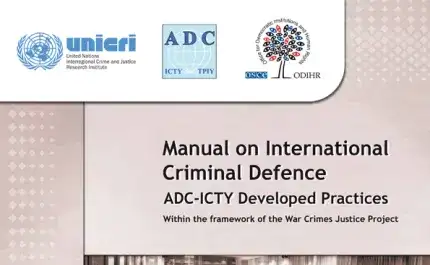
United Nations Interregional Crime and Justice Research Institute (UNICRI), Association of Defence Counsel Practising before the ICTY(ADC-ICTY), OSCE Office for Democratic Institutions and Human Rights (OSCE ODIR), Manual on International Criminal Defence: ADC-ICTY Developed Practices within the framework of the War Crimes Justice Project, UNICRI, Turin, 2011.
United Nations Interregional Crime and Justice Research Institute (UNICRI) Trafficking of Nigerian Girls in Italy. The Data, the Stories, the Social Services, UNICRI, Turin, 2010.
United Nations Interregional Crime and Justice Research Institute (UNICRI), Association of Defence Counsel Practising before the ICTY(ADC-ICTY), OSCE Office for Democratic Institutions and Human Rights (OSCE ODIR), Manual on International Criminal Defence: ADC-ICTY Developed Practices within the framework of the War Crimes Justice Project, UNICRI, Turin, 2011.
United Nations Interregional Crime and Justice Research Institute (UNICRI) Trafficking of Nigerian Girls in Italy. The Data, the Stories, the Social Services, UNICRI, Turin, 2010.
United Nations Interregional Crime and Justice Research Institute (UNICRI), Association of Defence Counsel Practising before the ICTY(ADC-ICTY), OSCE Office for Democratic Institutions and Human Rights (OSCE ODIR), Manual on International Criminal Defence: ADC-ICTY Developed Practices within the framework of the War Crimes Justice Project, UNICRI, Turin, 2011.
United Nations Interregional Crime and Justice Research Institute (UNICRI) Trafficking of Nigerian Girls in Italy. The Data, the Stories, the Social Services, UNICRI, Turin, 2010.
United Nations Interregional Crime and Justice Research Institute (UNICRI), Association of Defence Counsel Practising before the ICTY(ADC-ICTY), OSCE Office for Democratic Institutions and Human Rights (OSCE ODIR), Manual on International Criminal Defence: ADC-ICTY Developed Practices within the framework of the War Crimes Justice Project, UNICRI, Turin, 2011.